| Home | Update | Aikikai | The Chairman | 40th | Interview | Promotions | Dojos | Ken | Magazine |


海外で活躍する卒業生 第10話 合気道師範 山田惇(64期、マレーシア) |

|
拓大入学と同時に合氣道部入部、以降終生に亘り合気道に関わり現在マレーシアの首都クアラルンプールで合気道師範として生活しております。私の生い立ちと共に今日迄の経過等自己紹介させて頂きます。 運動苦手で虚弱体質「受け身だけでも覚えて少しでも健康な身体になれる様に」との父の指示に従い、中学に入り柔道部へ入る、何も知らず入ったのですが、柔道部は当然体の大きな猛者ばかりで投げられ役だけの毎日だった。受け身は出来るようになっても全く面白くなく、2年目に退部、高校は東京を遠く離れた大島に在る水産高校に入り、水泳やカッターボート漕ぎに明け暮れた事が人並みの健康を取り戻す成果となった。今思うとこの事が人生の方向転換であった。拓大では何か武道を身に付けたいと思い合氣道の紹介を見て入部。 卒業後の稽古貿易会社に勤めながら合気会本部道場が住まいの近くであり、拓大OBで拓大合氣道部設立者でもある藤田昌武先輩がこの道場の職員で指導員をされていた事もあり合気会本部へ入門。毎朝6時半から1時間の稽古に参加し昇段審査も5級からやり直した。稽古と仕事を続けて5年目... マレーシア赴任マレーシア、サラワク州の首席大臣が合気道見学に本部道場を訪ねマレーシアへの指導者派遣を依頼、その時対応されたのが当時本部道場事務局長であった藤田昌武先輩だった。 その後、合気道二代目道主横芝吉祥丸先生からのご推薦を戴きマレーシア、サラワク、クチン州へ1971年10月赴任となった。 クチンでの稽古開始当時クチンまでは羽田空港を朝出発、台湾、香港と立ち寄りシンガポールへ夜着き1泊、翌朝プロペラ機にて2時間程でクチン着。英国植民地時代そのままのたたずまいに感銘した。今でも変わらぬクチンの美しい街並み。単身にてクチン赴任となったが若気の至りでもあり、又スポンサーが首席大臣と言う事でなにひとつ不安は無かった。 言葉に付いては拓大2年までインドネシア語を取ったものの不勉強で、その頃丁度、日本からの賠償によるインドネシア留学生が大勢東京に来ていた為、何人かと友達になり、時には関西旅行のボランティア案内を引き受け、何とかインドネシア語会話を身につけた(マレーシアもインドネシアも共通の言語)。 当時クチン在住日本人は10数人のみ、クチンに着いて1ヵ月はホテル住まいでその後首席大臣官邸の一室での居候となり同時に稽古開始となった。 政府関係者やイスラム教普及青年団など殆どがイスラム教徒のお弟子さんで、合気道を見た事も無い初心者ばかり首席大臣も含め30人程のスタートとなり、先ずは朝稽古を始めた。その内警察、税関などから指導者育成の依頼により若い指導者育成に毎日3時間~6時間の特訓を開始した。 結婚、育児と家族半年後、現地生活に何とか見通しが付き婚約者であつた妻を呼び寄せる。首席大臣の仲人により結婚、そして華燭の宴を挙げて頂いた。 妻は女性と子供への合気道指導に当たった、1年後男子出産更に1年後女子出産、クチンには日本人学校など無い為子供2人は現地学校入学、娘は高校から日本で大学を卒業。 クチンでの生活夫婦共にクチンでの生活に慣れ親しみ食事も皆と共に手で口に運ぶ美味を知る。三度三度のマレ-シア料理には舌鼓を打つての生活であつた。銀婚祝儀で初めて口にした現地の赤飯が懐かしく思われるもの。稽古の方はと言うと順調とばかりは行かず町道場を増やす毎にマレ-人、華人、ダャック族(原住民)それぞれの宗教、生活習慣の違いにより難しい状況に立たされた事もあるが細々と続けている内にクチンにしっかりした組織の2道場ができ、今日益々の発展を遂げている。 ブルネイ王国との縁1995年隣国ブルネイ王国の日本大使館を通じ、モハメッド外務大臣個人指導の為ほぼ1ヵ月ブルネイ滞在となった。又クチンでの合気道も安定してきた。 それに対しマレーシアの首都クアラルンプール始め各都市での合気道はまちまちで大半が華人達によるがどうにも纏まらない状態にあつた所へ、クアラルンプールの警察訓練所から特別指導の要請があり、丁度30年過ごしたクチンを離れクアラルンプールへと移った。 クアラルンプールへ移住2001年8月クアラルンプールへ引っ越し。長男はインジネシア・バンドンの学生時代から開始した町道場指導を現在も継続。日本の大学を卒業後東京で就職した娘は現在クアラルンプールに起居し、結婚し二児の母親となっている。やはり合気道の稽古は続け、指導に当たっている。 クアラルンプールでの合気道生活はクチンとは環境が全く異なり、大都会そのもので日本食愛好家も多く、日本の物が満ちあふれている。日本人会館も立派な建物で警察での指導と共に日本人会館内に合気道部設立となり日本人を中心に現地の人々も多く稽古に参加している。 町道場の設立も慌ただしく先ずは2ヵ所に道場を構え直接の指導に当たってきている。また傘下道場として現地の方々によって既に在る道場また新たに出来た道場10数箇所に上る。 東南アジア及び中東への指導クアラルンプールへ移り住む前後に、ヨルダン国アンマンへ指導と昇段審査の為毎年訪問する運びとなった。更にアラブ首長国アブダビからも要請があり、近年、2009年10月にはルーマニア、オーストリア等へも指導に出かけた。この時はマレーシアの会員数名も参加した。 この頃タイ国から東南アジア合気道連盟設立案が提示されて参加協力を約し、ほぼ2年毎に輪番で合気道大会を開く事が決められ、今回は私の40周年を機にマレーシア国開催となり画期的大祭との支持賜る。毎回マレーシアでとの声が上がるも、とても当方は身が持たない。 今後健康が保たれる限り合気道を通じ日本とマレーシアは勿論の事、東南アジア各国そして中東諸国との親睦に僅かながらでも役立てればと夢を抱く。 回想40年以上合気道を礎に努力してきたにも拘らず、僅か、これだけの事しか出来なかったのかと反省するのみであるが能力の至らぬ者には致し方ない。お許しあれ。 今日迄合気道本部道場故植芝吉祥丸二代道主、そして植芝守央現道主始め拓大OB藤田昌武先輩方々のご尽力賜りました事、深く感謝申し上げます。又当初マレーシアへの招聘下さったTun Abdul Rahman Yakob閣下(ご健在85歳)始め多くのマレーシア政府関係者に感謝申し上げると共に、当アカデミー合気道塾マレーシアの会員となられた皆様には益々の稽古修行に励まれる事を願うと共に至心感謝申し上げます。 寄贈 合氣道部OB拓氣會 前會長 田村新太郎(64期) |

The word DO in AIKIDO and BUSHIDO carries the same meaning. It literally means WAY.
Thus AIKIDO is often translated to mean WAY OF HARMONY and BUSHIDO is WAY OF THE WARRIOR. Aikido is also very much a part of BUSHIDO.
The word BUSHIDO is also sometimes translated to mean the "Percepts of Knighthood". Originated in feudal Japan probably in 12th century Bushido embodied the "maxims of educational training governing the samurai or warrior class, of Japan - the class that throughout the nation's feudal age set the standard for whole people in manners, ideals of character, mental and moral codes of obligation."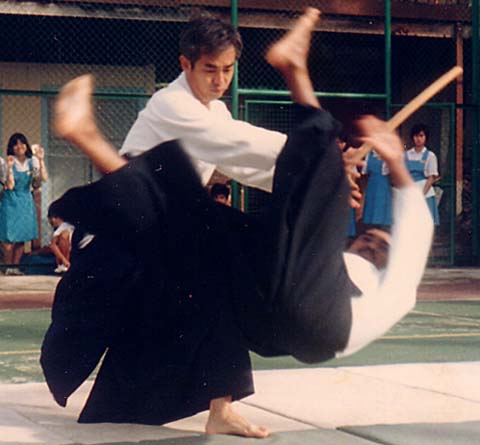
A famous book among budokas called "BUSHIDO, The Soul Of Japan" written by Professor Inazo Nitobe, first published in 1905, would be very useful reading for those who wishes to know the deeper meaning of the term BUSHIDO.
Aikido practitioners should realize that the word DO in Aikido has a much deeper meaning than its literal translation and a proper understanding of this deeper meaning of the word will help them better appreciate the philosophy and the moral precepts behind the teaching and the learning the learning of Aikido and help them master the physical martial arts techniques of Aikido.
Learning Aikido the right way should at least influence the ways we look at life, our thoughts, our thinking and our attitudes in our everyday deals with other fellow beings.
It can be said that anybody who steps on the Aikido Dojo to learn its martial techniques but has not become a better human being off the dojo as well has not learned Aikido and has in fact wasted his times and energy.
Much has changed in Japan since the Bushido eras of feudal Japan but much of the ideals and moral tenets of Bushido remain very much relevant in today's society.
Much has also changed in the ways Aikido is taught today compared to the times of O-Sensei when the teaching of Aikido was confined to the boundaries of Japan. Aikido today is fast growing martial arts with a large following of more than a million and half people of diverse racial cultural and religious background.
Quite naturally these developments have brought about changes not just on the techniques and methods of teaching Aikido but often also on its fundamentals and philosophy.
It is therefore important that from time to time we look back into history and traditions so that we do not forget O-Sensei original mission when he started to teach Aikido publicly.
He had wanted to leave to mankind something more than just another Japanese martial arts.
Through Aikido he had wanted that we train ourselves to become not just top notched martial artist but that we are able to harness our potential as a human being living in harmony with our fellow beings and the world around us.
Jun Yamada Shihan's Aikido classes strictly observed the time honored traditions he learned during his younger days attending lessons given by the Founder O-Sensei and the late Doshu Kisshomaru Ueshiba because he believes they are important to the proper training of disciplines and understanding of Aikido among his students.
Aikido practitioners who are genuine in learning Aikido should observed these codes.
Yamada Jun Shihan received personal certification as Shihan from the late second Doshu, Kisshomaru Ueshiba. His career as Shihan began when he accepted an invitation, with the blessings and knowledge of the late Doshu, to introduce and teach Aikido in Sarawak, Malaysia in 1971.

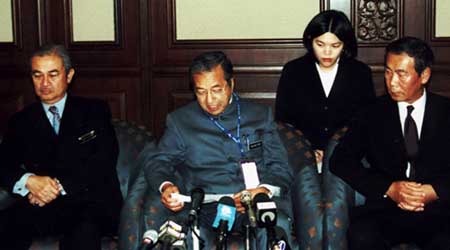
Atsushi (5th Dan) and Sae (4th Dan) help out whenever, wherever they can. Atsushi doing a demonstration. At a press conference with Prime Minister YAB Dato Seri Dr Mahathir and Vice PM YAB Dato Seri Abdullah bin Haji Ahmad Badawi.(4th September 2003)
It is Malaysia Aikikai's intention to correct these genuine mistakes especially amongst Yamada Jun Shihan's circle backed by comments from his longtime friends in Hombu Dojo.
"Circular Movement and the Spirit of Harmony" by Masatake Fujita Hombu Dojo Shihan
The purpose of Aikido is to create harmony-harmony of your spirit and body, harmony between your partner and yourself, and harmony with the movements of the Universe(Nature). A martial art which has as a purpose to be healthy in body and peaceful in spirit, to avoid conflict with others, to aboid spoiling Nature, to refrain from the use of physical power to achieve one's desires, to strive for becoming one with the Universe...this is Aikido. The collision of power against power-this is what we call fighting, or conflict. Aikido is not a collision of power agaist power. It is a joining of power with power, to come to a resolution of conflict. This transformation of power allows for Aikido technique to be born.
Aikido always holds this ideal, no matter what situation arises. In reality, all martial arts have the same ideal.
Aikido is comprised of circular movement. This movement is the way of non-conflict. Aikido takes a strong force and makes it circular. In order to elminate the necessity to injure or kill the other person this circular movement is necessary.
Aikido is not just a simple martial art, it is a unique Way, a representation of Japanese culture and tradition. It serves as an introduction of Japanese spirit throughout the world. The main principle of the Japanese spirit, of the ture Japanese heart, is Harmony.
The way of the Japanese spirit is not competition. The country of Japan is also known as "Yamato", or as the characters can be read, "great harmony". This is the heart of Japan.
No matter what country, or period in time, one must follow this way. Let us, as those who possess the Spirit of Japan, work towards accumulating corrrect training in Aikido.
(Updated 19th November 2002)UCHI-DESHI and SOTO-DESHI
As confirmed by Aikido Doshu Moriteru Ueshiba, UCHI-DESHI never existed at Hombu even since the times of O-Sensei.
Live-in students who are paid wages in return for their personal services are not called UCHI-DESHI. They are in fact employees of Hombu.
According to Fujita Shihan, General Manager of Hombu Dojo, in the martial arts world of Japan in the old days the word UCHI-DESGHI means a person who whishes to train in Aikido as his profession in life but who does not have the necessary financial means to do so and he applies to the Doshu to be allowed to stay at Hombu and study Aikido in return for providing personal services such as preparing the dojo before classes and cleaning up after classes.
He is provided food and lodging and free lessons but is not paid fixed wages or allowances. SOTO-DESHI simply means day students that attend classes at Hombu but return home after class.
PERUTUSAN DARI KETUA AIKIDO KISSHOMARU UESHIBA, TOKYO
(Ketua Aikido, Maha guru Kisshomaru Ueshiba Lahir 1917) Kami mengucap setinggi-stinggi terimakasih kepada Yang Amat Berhormat Ketua Menteri, Datuk Patinggi Haji Abdul Rahman Yakub dan ahli-ahli Aikido diSarawak kerana memberi layanan yang sangat baik semasa lawatan kami ke Kuching dalam tahun 1972. Tertubuh dan berkembangnya Aikido diSarawak adalah jasa baik Datuk Patinggi Hj. Abdul Rahman Yakub dan beliau sendiri sangat cenderung dalam seni silah tersebut. Aikido berasal dari seorang Pengasas Morihei Ueshiba berasakan silat-silat Jepun yang lama. Sekarang silat it berkembang dengan majunya oleh kerana ia merupakan satu latihan untuk kesihatan badan dan jiwa ia-itu satu unsur yang sangat penting bagi kehidupan manusia.
Dengan latihan tiap-tiap hari jiwa dan badan dapat disatukan dan dengan menggunakan gerakan semula jadi tenaga sendiri yang kuat itu dapat dikeluarkan. Ini bolehlah dikatakan sebagai filsafah yang paling tinggi dan jika diperaktik barulah Aikido mempunyai ertiyang lebeh dalam dan luas. Saya fikir bahawa oleh kerana filsafah Aikido yang sangat baik, maka itulah sebabnya Ketua Menteri suka dengan silat itu. Saya sangat gembira atas kemajuan Aikido diSarawak dibawah pimpinan Encik Jun Yamada, seorang guru Aikido dari Tokyo, yang diminta khas oleh YAB Datuk Patinggi Hj. Abdul Rahman. Dinegeri Jepun sekarang ada kira-kira 600 ribu orang ahli Aikido dan diseluruh dunia kira-kira 200 ribu orang. Yang istimewa mengenai Aikido ini ialah ianya diminati oleh orang-orang Malaysia diSarawak selama lima tahun. Kerana itu sekali lagi saya mengucapkan seinggi-tinggi terimakasih kepada Ketua Menteri. Saya percaya dengan Peduka Datuk sendiri giat berlatih Aikido diSarawak akan bertambah maju. Kami berharap agar latihan Aikido dapat dimajukan lagi dan dengan demikian bertambah eratlah persaudaraan antara Malaysia dan Jepun. Kami mengucap setinggi-stinggi terimakasih kepada Yang Amat Berhormat Ketua Menteri, Datuk Patinggi Haji Abdul Rahman Yakub dan ahli-ahli Aikido diSarawak kerana memberi layanan yang sangat baik semasa lawatan kami ke Kuching dalam tahun 1972. Tertubuh dan berkembangnya Aikido diSarawak adalah jasa baik Datuk Patinggi Hj. Abdul Rahman Yakub dan beliau sendiri sangat cenderung dalam seni silah tersebut. Aikido berasal dari seorang Pengasas Morihei Ueshiba berasakan silat-silat Jepun yang lama. Sekarang silat it berkembang dengan majunya oleh kerana ia merupakan satu latihan untuk kesihatan badan dan jiwa ia-itu satu unsur yang sangat penting bagi kehidupan manusia. Dengan latihan tiap-tiap hari jiwa dan badan dapat disatukan dan dengan menggunakan gerakan semula jadi tenaga sendiri yang kuat itu dapat dikeluarkan. Ini bolehlah dikatakan sebagai filsafah yang paling tinggi dan jika diperaktik barulah Aikido mempunyai ertiyang lebeh dalam dan luas. Saya fikir bahawa oleh kerana filsafah Aikido yang sangat baik, maka itulah sebabnya Ketua Menteri suka dengan silat itu. Saya sangat gembira atas kemajuan Aikido diSarawak dibawah pimpinan Encik Jun Yamada, seorang guru Aikido dari Tokyo, yang diminta khas oleh YAB Datuk Patinggi Hj. Abdul Rahman. Dinegeri Jepun sekarang ada kira-kira 600 ribu orang ahli Aikido dan diseluruh dunia kira-kira 200 ribu orang. Yang istimewa mengenai Aikido ini ialah ianya diminati oleh orang-orang Malaysia diSarawak selama lima tahun. Kerana itu sekali lagi saya mengucapkan seinggi-tinggi terimakasih kepada Ketua Menteri. Saya percaya dengan Peduka Datuk sendiri giat berlatih Aikido diSarawak akan bertambah maju. Kami berharap agar latihan Aikido dapat dimajukan lagi dan dengan demikian bertambah eratlah persaudaraan antara Malaysia dan Jepun.
KATA-KATA ALUAN OLEH TUN ABDUL RAHMAN YA'KUB. (D.P.,S.P.M.J.,S.I.M.P.,S.P.M.K.,S.P.D.K.,P.N.B.S.,B.M/Indonesia,LL.D./kehormat/ UKM.
Buku panduan Silat Kendo ini telah dikarang oleh Encik Jun Yamada, siapa telah mengajar Kendo kepada beberapa orang ahliahli BINA disamping beliau mengajar Aikido. Saya dengan penuh gembira mengucap tahniah kepada Encik Jun Yamada atas usahanya yang telah berhasi mengarang buku panduan ini dalam Bahasa Malaysia. Buku ini, saya percaya, akan menambahkan lagi minat pembaca-pembaca kapada silat yang sungguh "tua" ini.
Home Update Aikikai The Chairman 40th Interview Promotions Dojos Ken Magazine